EA College Football Mobile 27
- 4.2
- Rating
- 10.00K
- Installs
- Free
- Price

 Analysis by App-foxy
I spent time with EA College Football Mobile 27 as a sports game built around managing and coaching a dream team, and my first impression was that it aims at players who enjoy making decisions as much as watching the action unfold. It is not presented as a traditional console-style football experience squeezed onto a phone. Instead, the appeal is the manager’s seat: shaping a team, preparing for rivals, and trying to make smarter choices during a playoff-focused run.
That distinction matters. If you want a quick game where your main job is direct control of every play, this may not be the most natural fit. If you like sports strategy, team-building decisions, and the satisfaction of turning a promising lineup into a stronger competitor, the concept is much easier to appreciate. I found myself judging it less as a pure action game and more as a compact coaching experience designed for short sessions.
How the free entry point affects the value
The game is free to download, which makes trying it straightforward. You do not have to pay before discovering whether the manager-and-coach format suits you. That is the most important value point here: the initial barrier is low, so a curious football fan can test the basic rhythm without committing to a purchase.
You May Also Like

 Blood Strike: 2.5 Anniversary
Blood Strike’s Loadouts Turn Every Drop Into a Tactical Gamble
A close look at Blood Strike’s custom loadouts: how fast access to signature weapons reshapes its battle royale rhythm, rewards preparation, and narrows the gap between fights.

 Pandora - Music & Podcasts
Pandora’s Music Is Easy to Start, but Harder to Recover
Pandora’s strength is its low-effort path from a seed to a station. Its weak spot is how much confidence it asks you to place in connection, setup, and quiet recovery.

 8 Ball Pool
 Is Built on Rivalries, Rematches, and Routine
A close look at the rivalries, rematches, shared routines, and unanswered safety questions that turn a quick pool match into a persistent mobile community.

 Samsung Music
’s Quiet Strength Is Playing What You Already Own
Its reach comes less from spectacle than from dependable access to a personal library. That simplicity is both the app’s strongest retention engine and its ceiling.

 AccuWeather: Weather Radar
AccuWeather Review: A Quick, Clear Forecast for Everyday Decisions
For everyday plans, the best forecast is the one you can understand quickly. AccuWeather makes rain timing, radar, and local conditions easy to act on, with a few trade-offs.

 Hill Climb Racing
Why Hill Climb Racing Still Turns Crashes Into One More Run
A tiny car, a bumpy hill and one more upgrade: Hill Climb Racing keeps resurfacing because its simple chaos makes every near-miss feel personal.
More From Our News Desk



There are in-app purchases ranging from $0.99 to $99.99 per item. I would treat that range as a reason to play patiently rather than assume that spending is necessary. The free entry point gives the game a chance to prove itself first, while the purchase system means the eventual value depends on how comfortable you are with optional spending inside a competitive sports game.
For me, the sensible approach is to begin with a clear personal limit. Play enough to understand how team management, coaching choices, and playoff progress fit together, then decide whether additional spending would genuinely improve your enjoyment. A large purchase is difficult to justify if you have not yet developed a routine with the game or if you mainly want occasional football entertainment.
The age rating is Everyone, which makes the presentation broadly approachable for a general audience. That does not automatically make it ideal for every younger player, though. Anyone using a device with access to in-app purchases should still have a household rule for spending. The free label is useful, but it should not be confused with an entirely purchase-free experience.
What you are actually paying for
The verified price structure tells me something useful about the intended relationship with the game: access is free, while optional items can cost substantially more. I cannot honestly describe those purchases as guaranteed value for every player, because their worth depends on how much time you spend managing the team and how important faster progress or additional advantages feel to you.
That makes the game a better recommendation for someone willing to enjoy the free layer on its own terms. If you need to spend money before the experience feels satisfying, the value equation becomes much weaker. A free sports game should earn your attention before it earns your wallet, and I would apply that standard here.
The current version is 1.2.0, so the version label is useful when checking whether your installation is current. I would not use that number as a promise of a specific feature set or future support. It simply helps identify the release you are playing when comparing your experience with another device or discussing the game with someone else.
What the manager-and-coach format delivers
The strongest part of the concept is the shift in responsibility. I am not only looking for a good moment during a match; I am thinking about the team as a project. That creates a different kind of tension from a standard arcade sports title. A decision that seems small can feel important when the larger goal is to defeat rivals and move through a playoff setting.
This structure is especially useful for players who enjoy planning but do not always have time for a long console session. A short phone session can still have a purpose: check the team, consider the next challenge, make a coaching decision, and leave. That makes it easier to fit into a commute, a break, or a quiet few minutes at home without requiring the same uninterrupted attention as a full match.
One practical way I would use it is as a “decision game” rather than a background game. Before tapping through a session, I would decide what I am trying to improve: consistency, preparation for a difficult rival, or a better playoff run. That simple habit prevents the experience from turning into aimless menu checking, and it makes the manager role feel more meaningful.
The playoff framing also gives the game a natural sense of urgency. Regular progression can feel open-ended in many sports games, but a playoff objective makes each rival easier to place in your mind. You are not just collecting progress; you are trying to survive a more focused competitive path. That is a concrete strength for players who like sports games with a defined goal.
Why it can work in everyday play
Imagine having ten minutes before leaving for work or while waiting for an appointment. A direct-control football game may ask you to commit to a complete match, while a manager-focused title can be more comfortable when your time is fragmented. You can approach the session as a quick coaching check-in, make a few choices, and stop before the game starts competing with the rest of your day.
That convenience has a trade-off. Short sessions are only satisfying if the decisions feel meaningful. If you prefer the physical sensation of controlling movement, timing, and individual plays, a management-centered experience may feel indirect. I would not choose this as my first option for a friend who describes football games as “I want to be the player.” I would choose it for the friend who says, “I want to build the team and outthink the opponent.”
Another less obvious use is learning your own risk tolerance. Because the focus is on a dream team and rivals, you can notice whether you naturally favor safe preparation or aggressive choices. That makes the game more personal than a simple series of matches. You are gradually seeing what kind of coach you become, even within a compact mobile format.
Where it sits beside familiar sports games
Compared with a typical action-first football game, this title places more emphasis on the layer around the contest. The attraction is not necessarily the same as taking direct control of a star athlete. Compared with a pure management simulation, its playoff focus gives the experience a more immediate competitive target rather than asking you to treat the team as a long spreadsheet project.
That middle position is its clearest identity. It may appeal to someone who finds full simulations too demanding but finds arcade matches too shallow. The compromise is that it may not satisfy either extreme completely. A dedicated simulation fan could want deeper control and more detailed systems, while an action player could want more direct involvement during the game itself.
I would also compare it with other free sports games by asking one question: do you enjoy the choices between the exciting moments? If yes, the free download is worth testing. If no, a game centered on direct matches may deliver more enjoyment for the same time. The fact that this game comes from ELECTRONIC ARTS adds recognition, but the developer name alone should not decide whether its particular format suits you.
The trade-offs that become clearer over time
The first limitation is the distance between the player and the action. Being a coach and manager can be rewarding, but it is not the same as controlling every movement. Some players will interpret that distance as strategic freedom; others will experience it as a lack of hands-on control. Neither reaction is wrong, and it is the first thing I would clarify before recommending the game.
The second issue is the purchase range. Free access is helpful, but the presence of items reaching $99.99 means players should remain aware of how the spending model fits their habits. Even when purchases are optional, they can change how people evaluate progress. If you dislike games that place a monetary layer alongside team development, this may become irritating rather than motivating.
A third trade-off is the narrowness of the fantasy. The game is about a dream team, rivals, and a playoff sports challenge. That focus is useful because it gives the experience direction, but it may not be enough for someone looking for a broad collection of sports, a large career mode, or a more open-ended club-management world. I would rather see that as a clear boundary than expect the game to serve every sports fan.
There is also a psychological difference between free experimentation and long-term commitment. At first, the ability to try without paying feels liberating. Later, a player may start comparing progress with what could be obtained through purchases. My advice is to judge the game by the enjoyment you receive without assuming that spending is the correct solution to every obstacle. If the free experience already feels like a chore, paying more is unlikely to fix the underlying mismatch.
Small habits that improve the experience
I recommend setting a session goal before opening the game. “I will prepare for the next rival” is better than “I will play until I run out of time.” This keeps the management side focused and helps you notice whether your choices are actually improving your enjoyment.
I would also avoid making purchase decisions immediately after a disappointing result. Sports games are good at making a loss feel personal, especially when a playoff objective is involved. Waiting until the frustration passes gives you a better chance of deciding whether an item offers real value to your routine or merely promises to remove a temporary annoyance.
Finally, use the game as a test of preference rather than a test of patience. Give the coaching angle a fair chance, but do not force yourself to like it because the football theme is familiar. The useful question is not whether you like football in general; it is whether you like thinking about a football team from the manager’s perspective.
Who will get the most from it?
I think the best audience is a football fan who enjoys team-building, rival-focused competition, and short strategic sessions. The game is also a reasonable choice for someone who wants a free starting point and is comfortable deciding later whether optional purchases are worthwhile. Its Everyone rating makes it accessible in terms of age classification, while the coaching format gives it more thought than a simple tap-through sports distraction.
It could be particularly enjoyable for a player who shares a device or plays in small windows throughout the day. The manager role gives those brief visits a recognizable purpose, and the playoff setting can make progress feel more directed. It is not necessary to sit down for a long uninterrupted evening to understand why the game might be appealing.
I would skip it if your priority is direct, moment-to-moment control. I would also skip it if you are looking for a detailed, slow-burn management simulation with extensive statistical depth, because the central pitch here is more focused: build and coach a dream team, then take on rivals in a playoff-oriented sports game.
People who are uncomfortable with in-app purchases should approach it carefully rather than automatically rejecting it. The free access is a genuine advantage, but the available item range means that household spending controls and a personal budget are sensible. If you can enjoy the game without feeling pressured to buy, it has a fairer chance of delivering good value.
How I would recommend starting
I would begin without spending anything. Learn the rhythm of team decisions, see whether the rival-and-playoff structure keeps your attention, and notice whether you look forward to the next coaching session. That first test answers the most important question more reliably than the developer’s reputation or the store summary.
After that, I would decide what kind of player I am in this game. If I enjoy planning and can accept indirect control, I would continue gradually. If I keep wishing I could take over every play, I would move to a more action-oriented football alternative instead of trying to turn this into something it is not.
The public response gives it a solid starting signal, with a 4.1 average from around 825 ratings and roughly 300 written reviews. I see that as encouragement to investigate, not proof that it will suit everyone. Ratings can confirm that a game has found an audience, but the manager-versus-action distinction remains the more useful guide for an individual decision.
Its install figure is over 10K, which suggests that it has already attracted an initial mobile audience. That is helpful context, but I would still prioritize the free trial experience on your own device. A game can be popular enough to be worth exploring and still be the wrong fit for your preferred style of play.
My final recommendation
EA College Football Mobile 27 is worth trying if you want a free sports game that puts you in the role of team manager and coach rather than making direct control the entire point. I like its focused playoff objective, its suitability for short sessions, and the way it asks the player to think about rivals and team direction instead of simply repeating matches.
My recommendation comes with a clear condition: start free and keep your spending deliberate. The purchase range means its long-term value cannot be separated from your personal comfort with optional items. If the unpaid experience already gives you satisfying decisions and a reason to return, you have found a sensible mobile football option. If progress feels empty without purchases, the value is much harder to defend.
In the end, I would recommend it to the friend who enjoys coaching from the sidelines, planning around opponents, and building a dream team through focused sessions. I would point someone else toward a direct-control football game if they want to feel every play in their hands. That is not a weakness I would hide; it is the central choice this game asks you to make. Try it for free, identify which side of that divide you are on, and only then decide whether it deserves a permanent place on your phone.
FAQs for EA College Football Mobile 27
01What is EA College Football Mobile 27?
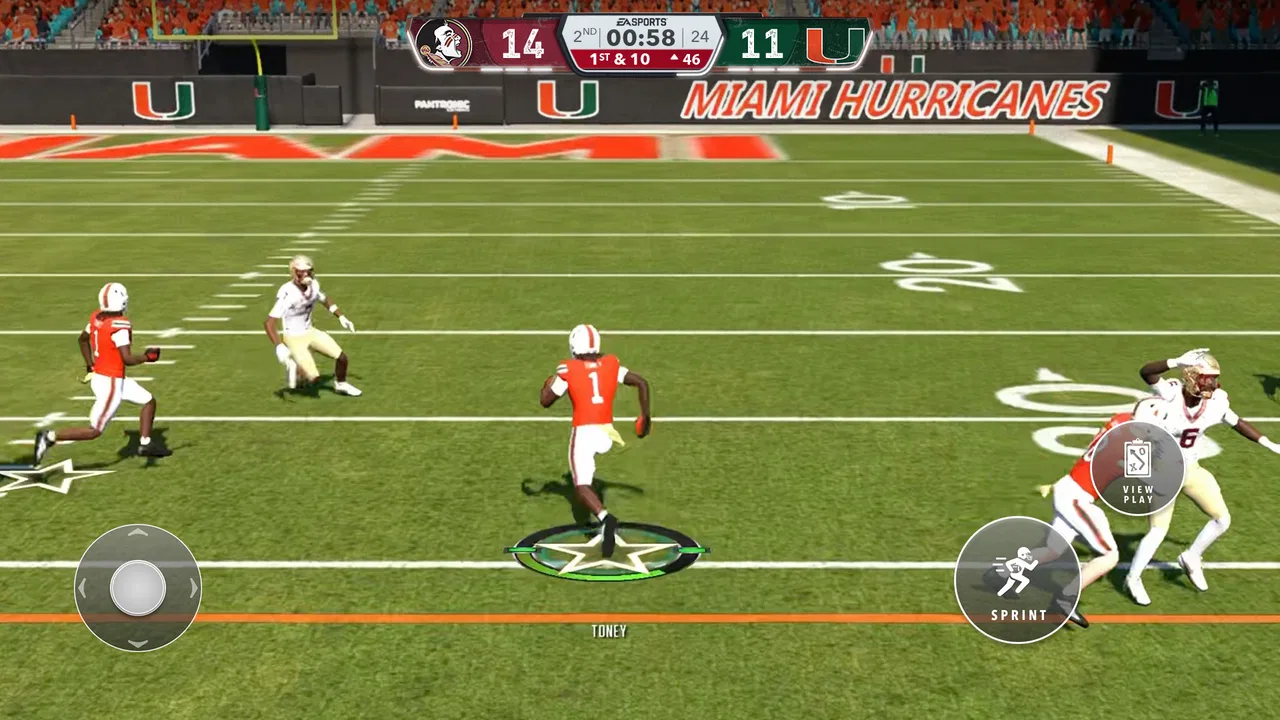
EA College Football Mobile 27 is expected to be a mobile American football experience centered on college teams, player development, competitive matches, and team management. Before downloading, check the official store listing carefully because the exact title, features, supported devices, release date, and available modes may vary by region or may not yet be officially confirmed by Electronic Arts.
02Is EA College Football Mobile 27 officially available for Android and iOS?
Availability should be verified through Google Play or the Apple App Store before installing anything. Search for the official publisher, EA, and compare the app name, logo, screenshots, developer information, and reviews. Avoid unofficial APK files, modified versions, or websites promising early access, since they may contain malware, request unnecessary permissions, or attempt to collect your account and payment details.
03Does EA College Football Mobile 27 require an internet connection?
A stable internet connection is likely to be required for most important features, particularly account login, live events, online competitions, updates, leaderboards, and purchases. Even if some menus or limited activities work offline, you should not assume that the full game can be played without connectivity. Wi-Fi is recommended for downloads and updates to reduce mobile data usage and connection interruptions.
04Is EA College Football Mobile 27 free to download and play?
If released as a mobile sports title, EA College Football Mobile 27 may be free to download while offering optional in-app purchases for progression items, currency, cosmetic content, or other advantages. Always review the store’s pricing information and the game’s purchase settings before playing. Parents should enable purchase restrictions, because repeated small transactions can quickly become expensive.
05What devices and permissions are needed to run EA College Football Mobile 27?
The required Android or iPhone specifications can only be confirmed by the official store listing and may change after updates. A relatively recent device, sufficient free storage, updated operating-system software, and a reliable connection will usually provide the best experience. Review requested permissions before installation, and be cautious if an unofficial version asks for access unrelated to gameplay, such as contacts or text messages.
Pros
- Quick matches fit well into short mobile gaming sessions.
- Team-building systems add long-term progression beyond individual games.
- College football atmosphere feels authentic and energetic.
- Regular challenges provide useful goals for returning players.
- Controls are simple enough for newcomers to learn quickly.
Cons
- Progress can feel slow without spending premium currency.
- Some features require a stable internet connection to work.
- Menus and upgrade systems may overwhelm first-time players.
- Match outcomes can sometimes feel influenced by team ratings.
- Battery usage may be noticeable during longer play sessions.

EA College Football Mobile 27
Gallery